
If you have spent any time shopping for a streaming service, you have probably run into the term static IPTV and wondered whether it is a feature, a gimmick, or just more marketing noise. It is a fair question. The phrase gets thrown around a lot, and most pages explain it badly.
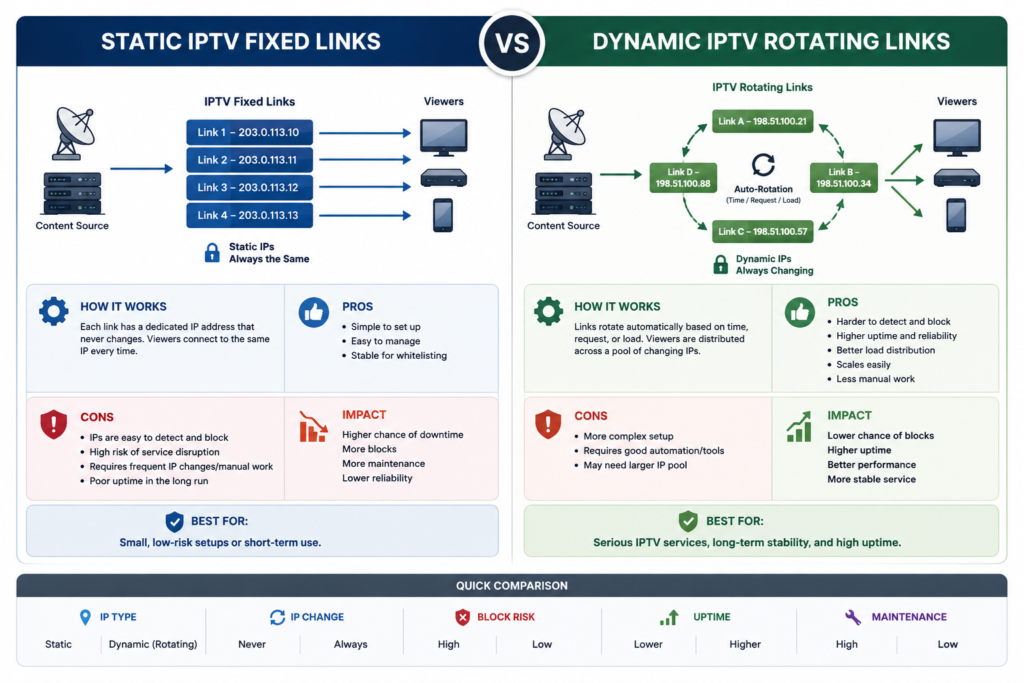
Here is the short version. Static IPTV refers to an internet protocol television setup where the stream sources and channel addresses stay fixed instead of rotating or shifting around. That stability is the whole point. When the underlying links do not keep changing, your channels load faster, drop less, and behave the way you expect them to night after night.
I have tested more streaming TV service and static IPTV setups than I care to admit, and the single biggest difference between a frustrating experience and a smooth one usually comes down to this kind of consistency. So let us go through what static IPTV actually is, where it fits among cable alternatives, and how to tell a solid service from a flaky one.

What static IPTV actually is
Internet protocol television, or IPTV, delivers television over your regular internet connection instead of through a satellite dish or a coaxial cable. Your channels arrive as data packets, the same way a video on a website does. That part is true of every IPTV service.
The “static” piece describes how the service handles its stream addresses. In a static setup, each channel points to a fixed source that does not rotate on a schedule. Compare that to dynamic systems, where the back-end keeps swapping links to dodge load or other issues, and you can feel the buffering every time a swap happens mid-broadcast.
Think of it like a home address versus a hotel you keep checking out of. A fixed address means the postman always knows where to go. That predictability is why a digital television service built on stable links tends to feel more like proper TV and less like a science experiment.
A few traits show up in most stable static IPTV services:
- Channel links stay consistent over long periods
- Playlists rarely need manual refreshing
- Electronic programme guides line up correctly with what is actually airing
- Reconnection after a pause is quick because the source has not moved
Static IPTV versus traditional cable
Plenty of people are quietly furious at their cable bill, and static IPTV is one of the more popular cable alternatives for good reason. Still, it helps to be honest about the trade-offs rather than pretending one option wins on everything.
| Feature | Static IPTV | Traditional cable |
|---|---|---|
| Monthly cost | Usually lower | Often higher, with add-ons |
| Equipment | Existing devices | Proprietary box and dish |
| Channel range | Very wide, including international | Region-limited packages |
| Installation | Software-based, minutes | Engineer visit, scheduled |
| Internet dependency | Required | Not required for live TV |
| Contract | Often flexible | Frequently locked in |
The table makes the appeal obvious. You reuse hardware you already own, you skip the engineer appointment, and you usually pay less. The catch is that an internet protocol television stream is only as good as your connection. No broadband, no static IPTV broadcast. Cable does not care if your Wi-Fi is having a bad day.
That said, most homes already have reliable internet for everything else, so the dependency rarely becomes a real problem. If you can watch Netflix without trouble, you can almost certainly run a static IPTV service without trouble.
How a fixed-source service delivers live TV streaming
The technical journey behind static IPTV is simpler than the jargon suggests. A broadcaster sends a signal to the IPTV provider. The provider encodes it into a stream and assigns it a fixed address. Your app or device requests that address, and the video arrives in small chunks that play back smoothly.
Because the address does not move, your player can cache and predict the next chunks more reliably. This is the quiet reason static setups handle live TV streaming so well. Sport, news, and anything time-sensitive depends on low latency, and a moving target works against that.
On-demand content on a static IPTV service works on the same principle. When you pick a film, the player fetches it from a stable library location rather than hunting for a link that may have shifted since yesterday. The result is faster start times and fewer of those spinning-wheel moments that make you want to throw the remote.
A reliable static IPTV provider usually combines three things: stable sources, decent server capacity, and an honest channel list. Miss any one of those and the experience falls apart, no matter how good the marketing copy reads.
Setting up a static IPTV service
Getting started is far less intimidating than people expect. Most of the work is choosing a good provider; the technical setup takes minutes.
Here is the general flow:
- Pick a provider that uses stable, static stream sources
- Receive your login details or an M3U playlist link
- Install a compatible player on your device
- Enter your credentials or paste the playlist
- Let the channel list and programme guide load
- Test a few live channels and some on-demand content
Static IPTV works on the devices you already own. Smart TVs, Android boxes, Amazon Fire Stick, phones, tablets, and ordinary computers all run IPTV players. You do not need specialist hardware, which is part of why this counts among the cheaper cable alternatives.

One tip from experience: test the service before you commit to a long plan. A short trial tells you more than any review, because your home network and your viewing habits are unique to you. If the channels you care about load instantly and stay put, that is your answer.
Why stability beats flashy features
Streaming companies and static IPTV providers love to advertise enormous channel counts. Tens of thousands of tv channels online sounds impressive on a sales page. In practice, you watch maybe twenty channels regularly, and you want those twenty to work every single time.
This is where a fixed-source approach earns its keep. A modest, stable channel list beats a gigantic, unreliable one. I would rather have a static IPTV service with 500 channels that never buffer than 50,000 that crash during the match I actually wanted to see.
Stability is where static IPTV quietly wins. It also affects the things you do not think about until they break. Programme guides stay accurate. Catch-up features work. Recordings, where supported, do not fail halfway through. None of that is glamorous, but it is what separates a service you keep from one you cancel after a month.
There is a trust angle here too. A provider that invests in stable infrastructure is usually a provider that plans to be around next year. Constant link rotation often signals a thinner operation patching problems on the fly.
Choosing a reliable static IPTV provider
Picking a static IPTV service is where most people go wrong, so it is worth slowing down. The market is crowded, and quality varies wildly between a polished online streaming platform and a hastily assembled one.
Look for these signs of a serious static IPTV operation:
- A genuine trial period so you can test stability yourself
- Clear, fixed pricing without buried renewal traps
- Responsive support that answers before you have paid
- A channel list that matches what is advertised
- Consistent streaming across both live TV and on-demand content
Be wary of the opposite signals. Vague answers, pressure to buy a multi-year plan immediately, and prices that look too good to be true usually point to a service that will disappoint. A trustworthy digital television service has no reason to rush you.
It also helps to read how a provider talks about its own infrastructure. Companies confident in their setup tend to explain how they keep streams stable. Those that dodge the question are often hiding the answer. best IPTV Provider
Common questions about static IPTV
A few questions come up again and again, so it is worth answering them directly.
Does this kind of service need fast internet? Not blisteringly fast, but stable. A connection around 25 Mbps comfortably handles high-definition live TV streaming. For 4K, aim higher. Consistency matters more than raw peak speed.
Will it work on my existing TV? If your TV is smart, probably yes. If not, an inexpensive streaming box or stick adds the capability for very little money.
Is the on-demand content as good as the live channels? On a well-built service, yes. The same stable infrastructure that powers live TV serves the on-demand library, so films and box sets load just as reliably.
Can I use it on more than one device? That depends on the plan. Many services allow several simultaneous streams, which suits households where people watch different things at once.
What about legality and safety?
This part gets glossed over too often in static IPTV discussions, so I will be direct about it. The technology itself is completely legitimate. Plenty of major broadcasters and telecoms companies deliver their own channels over the internet using exactly this method. The legal question is about content rights, not the delivery method. Static IPTV itself is just a way of moving channels across the internet.
A reputable provider holds the proper agreements for what it broadcasts, or it streams content that is free to redistribute. That is the line to look for. If a service offers every premium sports package on earth for the price of a coffee, something is off, and you should treat that as a warning rather than a bargain.
From a safety angle, stick to providers with a real website, contactable support, and clear terms. Avoid sideloaded apps from random forums and never hand your card details to a service that communicates only through a messaging app. These habits protect both your money and your devices.
Final thoughts
A fixed-source streaming setup is not a miracle product, and anyone promising the world is usually overselling. What it offers is steadier, more predictable viewing, and once you have lived with a static IPTV system, going back is hard.
The technology behind internet protocol television keeps improving, and reliable, fixed delivery is the part that makes the whole thing feel like proper television rather than a gamble. Pick a provider that takes stability seriously, test it properly, and you will spend far more time watching and far less time staring at a loading screen.
For most people tired of rising cable costs, a carefully chosen service of this kind is one of the more sensible cable alternatives available right now. The key phrase there is carefully chosen, and it is worth repeating because it is the part most people skip.